May birthstone and birth flower
Emerald · Lily of the valley and Hawthorn
 EmeraldHardness 7.5–8
 Lily of the valleyBirth flower
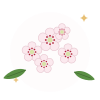 HawthornBirth flower
Traditional stone: Agate
May's birthstone is emerald, the deep green gem of spring, and its birth flowers are lily of the valley and hawthorn, two white blossoms of the season.
Emerald
Emerald is the green variety of beryl, a mineral that also gives us aquamarine and morganite. Its color comes from small amounts of chromium, vanadium or both, and it ranges from soft spring green to a deep, slightly bluish green. The most prized stones are rich and vivid without being too dark. Most emeralds hold tiny inclusions, and jewelers have long called these the jardin, French for garden, because they can look like moss or foliage inside the stone. If you were born in May, those little gardens are part of what makes your stone its own.
The name travels back through Old French and Latin to the Greek smaragdos, a word once used for several green stones. Emeralds were mined in ancient Egypt, and they were prized in the Roman world. Later, the deep green stones of South America changed the gem trade, and Colombia is still the source most closely tied to emerald today, alongside other sources such as Zambia and Brazil.
With its fresh green, emerald has long been linked with spring, renewal and growth, which suits a May birthday well. It has also stood for love, loyalty and hope. In old lore, emerald was believed to reveal truth and faithfulness, and some thought it could let its owner glimpse the future. Today it remains a stone of rebirth and steady affection, and the traditional gem for a 20th or 35th wedding anniversary.
Traditional stones
May has a single modern birthstone, emerald, but older traditional lists often gave the month agate. Agate is a banded form of chalcedony, a kind of quartz made of very fine crystals. It forms in layers inside cavities in rock, so a polished slice can show rings, stripes or moss-like patterns in white, gray, brown, red, blue or green. It is fairly tough, so it has been carved into beads, seals, cameos and cups since ancient times.
In folklore, agate was carried as a charm for protection, courage and good fortune. When jewelers drew up the modern US list in 1912, they chose emerald for May, and it has stayed the month's stone ever since. Agate lives on as the traditional choice for anyone who likes an earthier, patterned stone.
The birth flowers: Lily of the valley and Hawthorn
Lily of the valley blooms in spring, usually from late April into May. Each arching stem carries a row of tiny white bells with a sweet, clear scent, tucked between two broad green leaves. In the Victorian language of flowers, it meant the return of happiness, and it has also stood for sweetness and humility. In France, small sprigs are traditionally given on May 1 as a token of luck for the coming year. All parts of the plant are toxic if eaten, so keep it away from children and pets.
Hawthorn is a thorny shrub or small tree that covers itself in clusters of small white or pale pink flowers in late spring. In Britain it blooms so reliably in this month that it is often simply called may, and its flowering has long been tied to May Day celebrations. Its blossoms gave way to red berries in autumn, and in the language of flowers hawthorn stood for hope. Together, these two May flowers make a gentle pairing: one small and fragrant at ground level, the other a cloud of blossom in the hedgerows.
As a gift
Emerald is hard enough for rings, but its inclusions can make it brittle, so choose a protective setting. A bezel-set emerald ring, a small pendant for a May baby's first piece of jewelry, or a pair of stud earrings all keep the stone safe while showing off its green. The classic emerald cut, with its stepped facets and cut corners, was designed partly to protect this stone.
For flowers, a small posy of lily of the valley tied with ribbon makes a sweet May birthday or Mother's Day gift, or give potted pips to bloom indoors. A few branches of flowering hawthorn in a tall vase bring a country spring feel to the table.
Wearing and care
Emerald rates 7.5 to 8 on the Mohs scale, so it resists scratches well, but its natural inclusions make it prone to chipping from a hard knock. Take off emerald rings for gardening, sports and heavy work. Many emeralds are treated with oils, so clean them gently with lukewarm water, mild soap and a soft brush, then dry with a soft cloth. Avoid ultrasonic cleaners, steam, harsh chemicals and sudden heat, and store your emerald on its own in a soft pouch.